14 March 2025
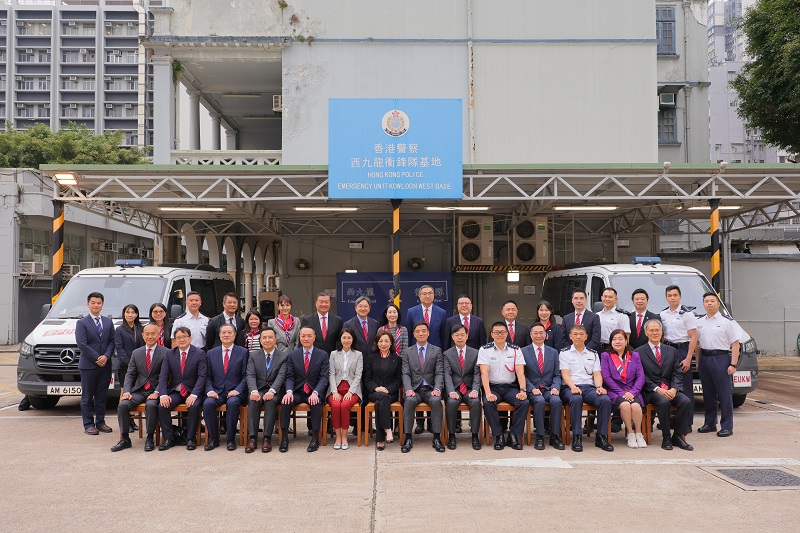
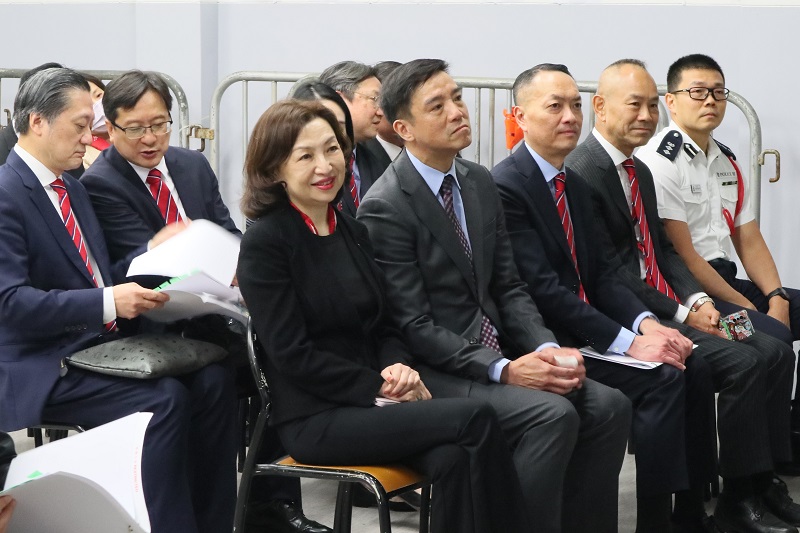
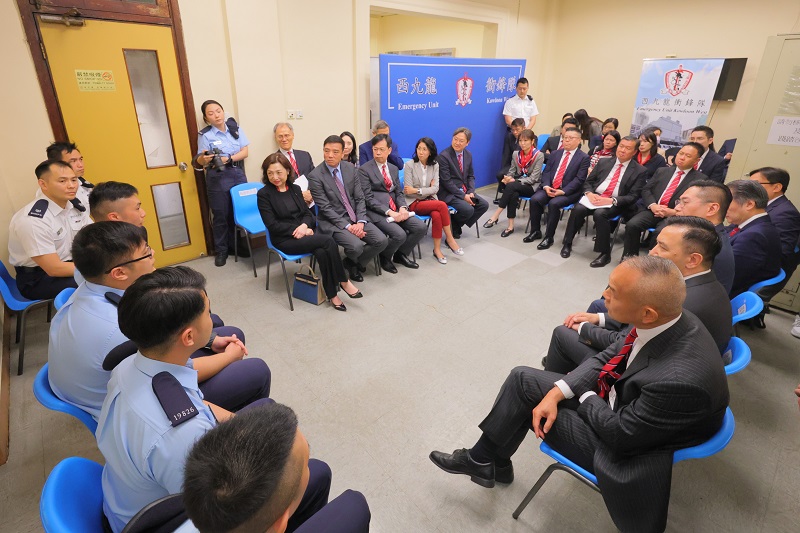
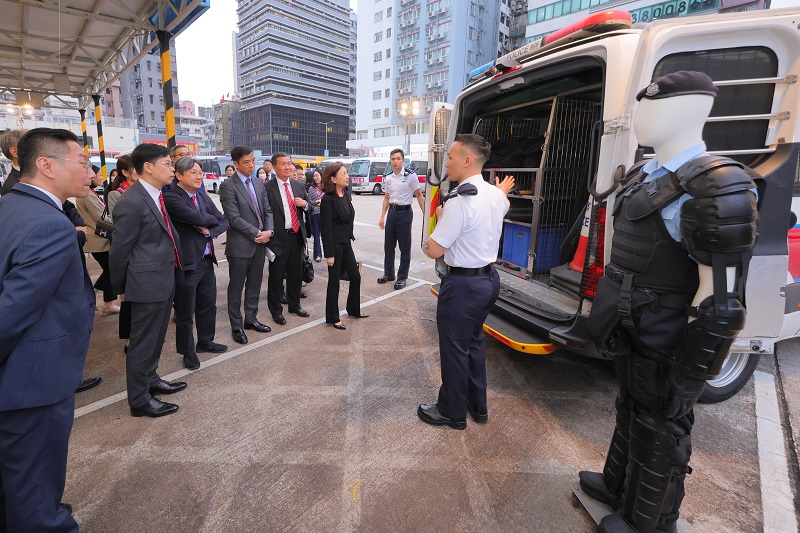
An IPCC delegation of Council Members and Secretariat staff, led by IPCC Chairman Ms Priscilla WONG Pui-sze, SBS, JP, went to Mong Kok Police Station to observe the newly enhanced installations and facilities in the Special Temporary Holding Area. The delegation also met with frontline officers of the Emergency Unit Kowloon West (EUKW) to learn about their frontline law enforcement duties, daily equipment, as well as the difficulties and challenges they face while on duty.
The Emergency Unit is often deployed to the forefront to provide immediate support across various policing areas and handle emergencies, including providing support for mass arrests. The Emergency Unit has to deal with a variety of situations on the frontline from time to time and frequently interacts with the public in carrying out their duties, which may give rise to complaints. In light of this, IPCC Members met with EUKW officers to learn about their duties, the command structure of EUKW, the equipment they use to assist in law enforcement, and the various challenges they face in frontline operations. Frontline police officers also shared with Members their first-hand experiences in dealing with emergencies, such as conducting stop-and-search on suspicious individuals and vehicles in busy areas. This enables Members to better understand the Emergency Unit’s tactics, coordination and contingency measures in case of an emergency, and the Emergency Unit officers’ unwavering commitment to protecting the safety and property of the public.
IPCC proposes Service Quality Improvement Initiatives (SQIIs) to the police from time to time. The Complaints Against Police Office arranged for IPCC Members to visit Mong Kok Police Station to let Members see the progress of the implementation of the SQII regarding the procedures and guidelines after members of the public are brought into police stations, including how the newly enhanced facilities and installations in the Special Temporary Holding Area would ensure that detainees are properly guarded.
IPCC Chairman Ms Priscilla WONG said, “What we heard from the sharing by EUKW officers today will assist Members and I in examining complaints in future as we gain a better understanding of the considerations frontline police officers would take into account when they enforce the law in real-life situations, along with the difficulties and challenges they encounter. IPCC always upholds the principle of handling each complaint ‘strictly on the basis of fact and evidence, honestly, without fear or favour’ to do justice to both complainants and complainees. The Council also put forward a series of SQIIs to the police force to help enhance their services.”
Over the years, IPCC has proposed over 240 SQIIs on areas for improvements in police practice or procedures, and has been to different police units to follow up on the implementation and effectiveness of the SQIIs. The goal is to assist the police in enhancing their service quality and reducing unnecessary complaints.

31 October 2024
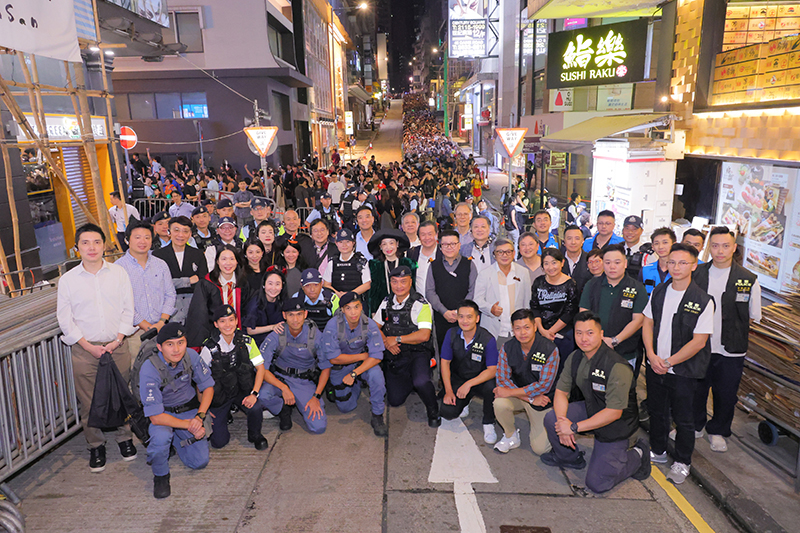
An IPCC delegation of Council Members and Secretariat staff, led by IPCC Chairman Ms Priscilla WONG Pui-sze, SBS, JP, went to Lan Kwai Fong (LKF) in Central on Halloween night. During the occasion, Members learnt about the situations and sentiments of the public and tourists during Halloween activities, and the operation and challenges faced by frontline police officers as they implemented crowd management strategies for large-scale festive celebration. If any complaints arise on the occasion in the future, this firsthand experience will enable Members to conduct a comprehensive examination of such complaints.
IPCC Members were briefed by representatives of the Central Police District (CDIST) at the District Operations Room (DOR) on crowd management measures during Halloween. Police representatives introduced the various zones set up by the police in LKF and outlined how they harnessed technology to strengthen their crowd management capabilities.
Police representatives provided an overview to Members on the installation of new CCTVs over LKF. The CCTVs captured and transmitted real-time images from multiple angles to DOR to help the police monitor the crowd situation and develop appropriate crowd management measures, thereby ensuring the smooth operation of events and maintaining public safety. Representatives of the CDIST also demonstrated the functions of “Crowd Estimation System” that was used for the first time on Halloween night. The system utilises image analysis technology to perform real-time estimation of on-site people density, allowing the police to identify potential safety hazards and perform pedestrian diversion measures as soon as necessary. Public broadcast devices were also installed in the area to issue public announcements and take contingency measures in case of an emergency.
Members then proceeded to several key locations on Hollywood Road, Wyndham Street, D’Aguilar Street and Queen’s Road Central to observe how frontline police officers diverted pedestrians and traffic through employing one-way and tidal flow crowd control measures in LKF during peak periods on Halloween night. The IPCC delegation also went to the temporary policing area at the junction of D’Aguilar Street and Wellington Street. Members engaged in discussions with frontline police officers to understand how they achieved the goals of their operational measures while taking into account the facilitation of festive celebrations and the protection of public safety.
IPCC Chairman Ms Priscilla WONG said, “Hong Kong is a hub for mega events. During large-scale activities, the police face great challenges not only in ensuring the smooth operation of the events but also in safeguarding the life and property of citizens and tourists in crowded environments. This on-site observation in LKF provided Members with insight into the environment and situations of a mega event, allowing Members to gain firsthand experience of the sentiments expressed by citizens and tourists participating in such events. The Council also had an understanding of the considerations frontline police officers must take into account when enforcing the law and maintaining order in real-life settings. Should complaints arise from this festive event in the future, this experience will equip Members to better understand on-site circumstances and perform a thorough examination of complaint cases.”
When vetting complaints, IPCC always upholds the principle of handling each complaint “strictly on the basis of fact and evidence, honestly, without fear or favour” to ensure complaints are handled in a fair and impartial manner. The Council will continue to monitor the complaint figures and trends arising from large-scale festive celebration, while also seeking to propose Service Quality Improvement Initiatives to assist the police in enhancing their service quality and reducing unnecessary complaints.






4 October 2024
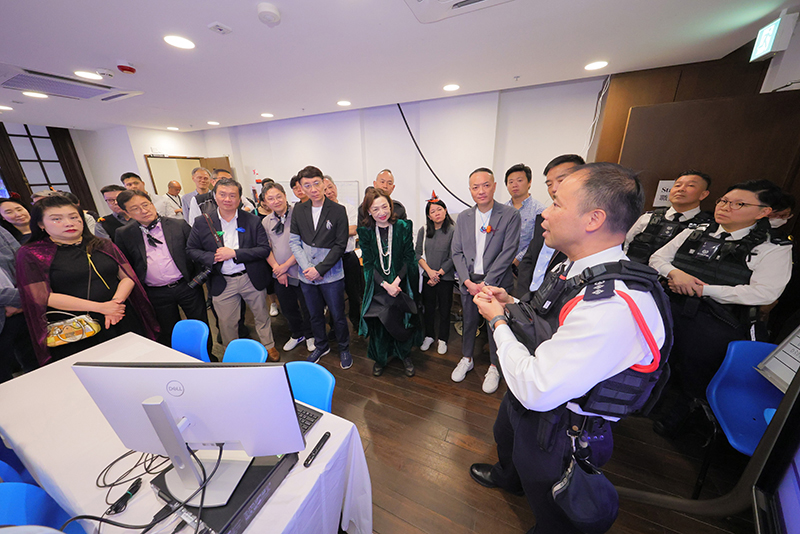
During the annual gathering between the IPCC and the police force, IPCC Chairman Ms Priscilla WONG Pui-sze, SBS, JP, along with Members and Secretariat staff, exchanged views with the Commissioner of Police and senior police officers on complaints handling and service quality enhancement within the force, aiming to strengthen public confidence in the current complaints system.
27 May 2024
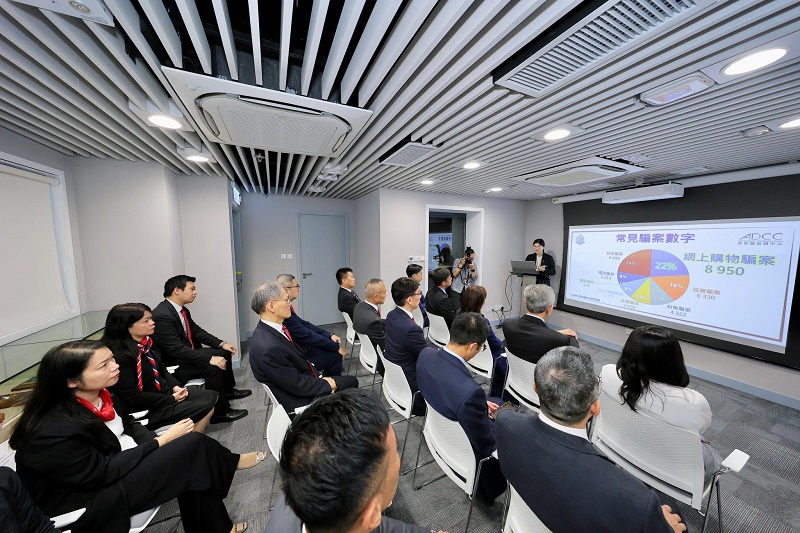
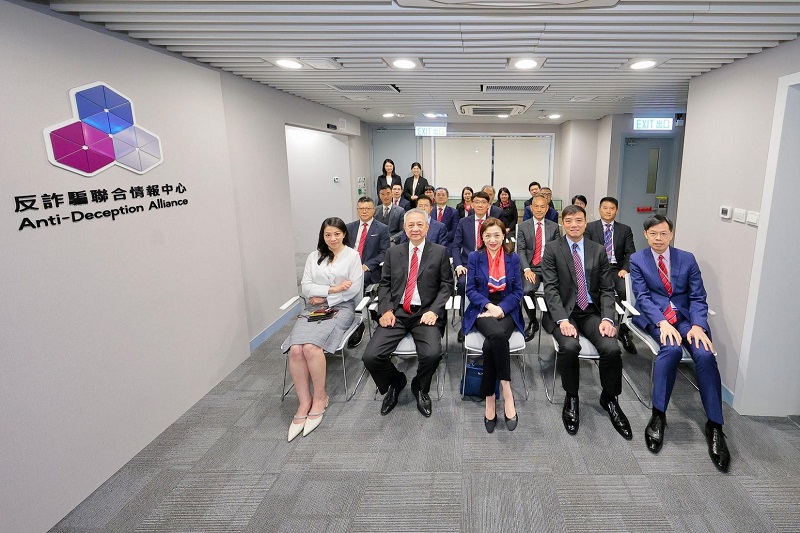
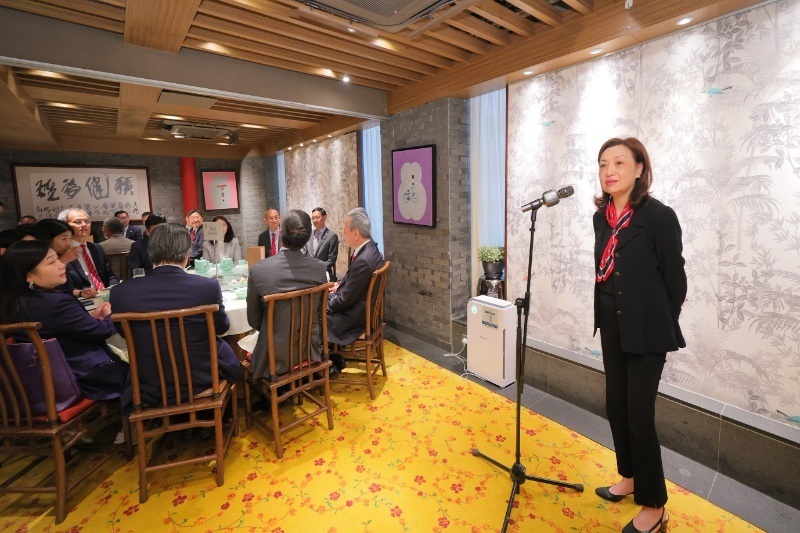
An IPCC delegation of Council Members and Secretariat staff members, led by IPCC Chairman Ms Priscilla WONG Pui-sze, SBS, JP, visited the Anti-Deception Coordination Centre (“ADCC”) and the Anti-Deception Alliance (“ADA”) in the Police Headquarters. During the visit, Members learned about the police’s latest strategies to prevent and combat deception, and the challenges faced by police officers, the understanding of which would assist in the comprehensive scrutinization of complaint cases.
The IPCC delegation received a briefing from representatives of the Commercial Crime Bureau (CCB) on the work of the ADCC in three aspects, namely law enforcement, intelligence gathering and public education. On one hand, the ADCC works in close collaboration with banks, telecommunications service providers and law enforcement agencies outside Hong Kong, while launching initiatives such as the “Upstream Scam Intervention” scheme and the year-round “Anti-Scam Promotional Truck” to raise citizens’ anti-scam awareness on the other. CCB officers also shared the challenges they face in fighting fraud cases such as telephone deception, online shopping and investment scams, amid the ever-changing online landscape.
In addition, CCB officers introduced the ADA jointly established by the police and 10 major banks late last year. The police representatives briefed Members on the process of intercepting payments to fraudsters and highlighted some successful cases where the “Upstream Scam Intervention” scheme had proactively identified of potential victims, leading to the timely prevention of deception.
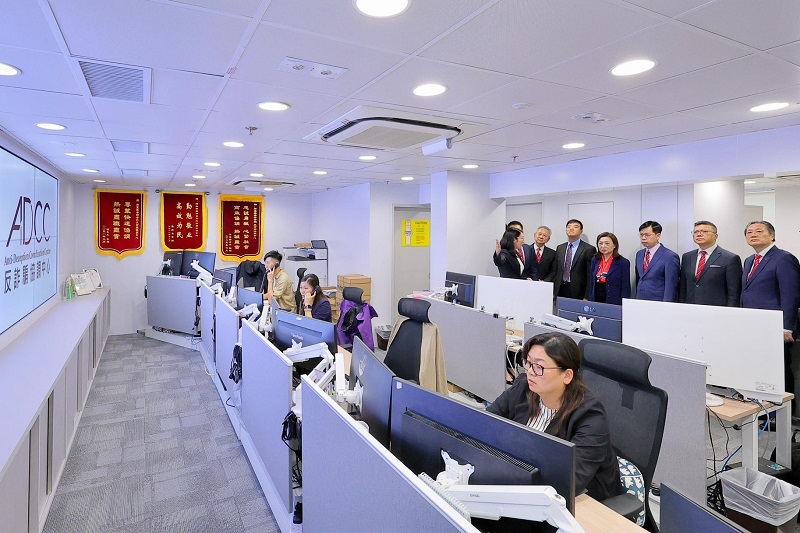
Members then toured the ADCC operation centre to learn about the “Anti-Scam Helpline 18222”. The call centre provides anti-deception consultation services to the public around the clock and has a real-time monitoring system to integrate relevant data for more effective interception of fraud cases.
IPCC Chairman Ms Priscilla WONG said, “Through this visit, the Council has gained a better understanding of the police’s dedication to combatting and preventing deception, and their determination in protecting the property of the general public. However, as the Chinese saying goes, ‘As virtue rises one foot, vice rises ten’. To prevent fraudsters from getting their ways, apart from expediting the crackdown on deception cases by the police, it is also crucial for the public to remain vigilant at all times to avoid falling into such traps.”
In recent years, as the number of deception cases continues to surge, more members of the public have filed reports to the police. The resulting increase in interface between the public and police officers might give rise to more occasions for complaints. When scrutinizing complaints, IPCC always upholds the fact-and-evidence-based principle to ensure justice for both complainants and complainees. The Council will continue to closely monitor the complaint figures and trends arising from police investigation and handling of deception cases, and proactively propose Service Quality Improvement Initiatives to assist the police in enhancing their service quality and reducing unnecessary complaints.